How to Measure for a Chimney Cap: Step-by-Step Guide

How to Measure for a Chimney Cap
Preparation & Safety First
- Tools Required: A tape measure, notebook, pen, and heavy-duty work gloves (terra cotta, clay tiles and masonry can be sharp around the edges).
- Safety Warning: Always exercise extreme caution when working on a roof. Ensure your ladder is properly secured on flat ground, wear slip-resistant shoes, and avoid going up if the roof is wet, icy, or excessively steep. If you are uncomfortable with heights, hire a local chimney sweep to get the measurements for you.
- Consider hiring a qualified chimney professional if you are uncomfortable working at height or cannot safely access the chimney.
Step 1: Identify Your Chimney Cap Mounting Type
Single-Flue (Tile Mount):
These caps attach directly to the clay terra cotta tile that extends above the concrete top of your chimney.

For this style, you will generally need to measure:
- Outside flue length
- Outside flue width
- Outside diameter, for a round flue
- Exposed flue-tile height
- Flue shape
Single-Flue (Liner Mount):
These caps attach directly to the stainless steel chimney liner top plate or chimney liner.

Measure the outside diameter or dimensions of the liner or connection point. Confirm the required measurements with the product specifications because mounting systems may vary.
Multi-Flue (Top Mount):
A top-mounted chimney cap will bolt directly into the top of the chimney crown and will cover most of the chimney crown and all of the chimney flues.
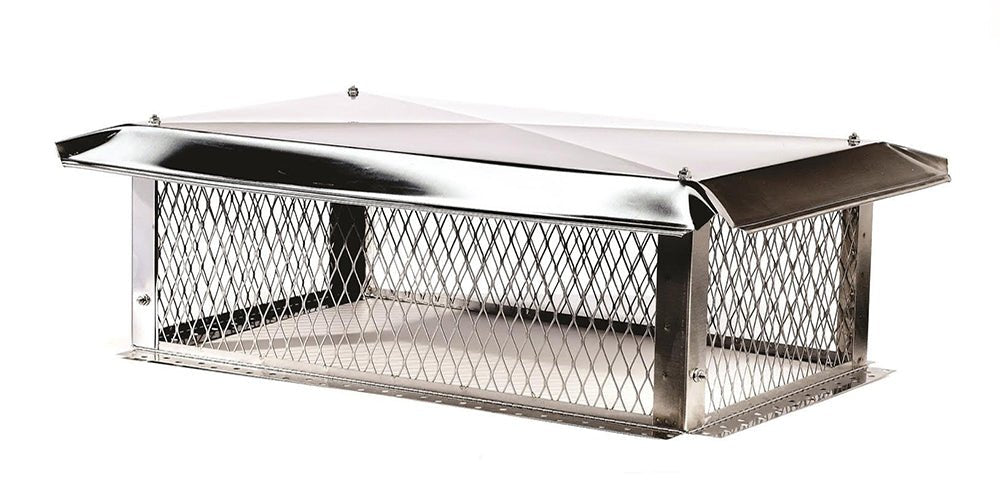
For this style, you will generally need:
- Overall flue-group length and width
- Chimney-crown length and width
- Height of the tallest flue
- Available flat mounting space around the flues
Multi-Flue (Crown Mount with Skirt):
If you have multiple flues close together, or if your clay tiles are flush with the concrete, you might have or need a crown-mounted cap with a skirt. These bolt directly into the side of the concrete crown or chimney chase and cover everything underneath them, overlapping the sides of the top of the chimney.
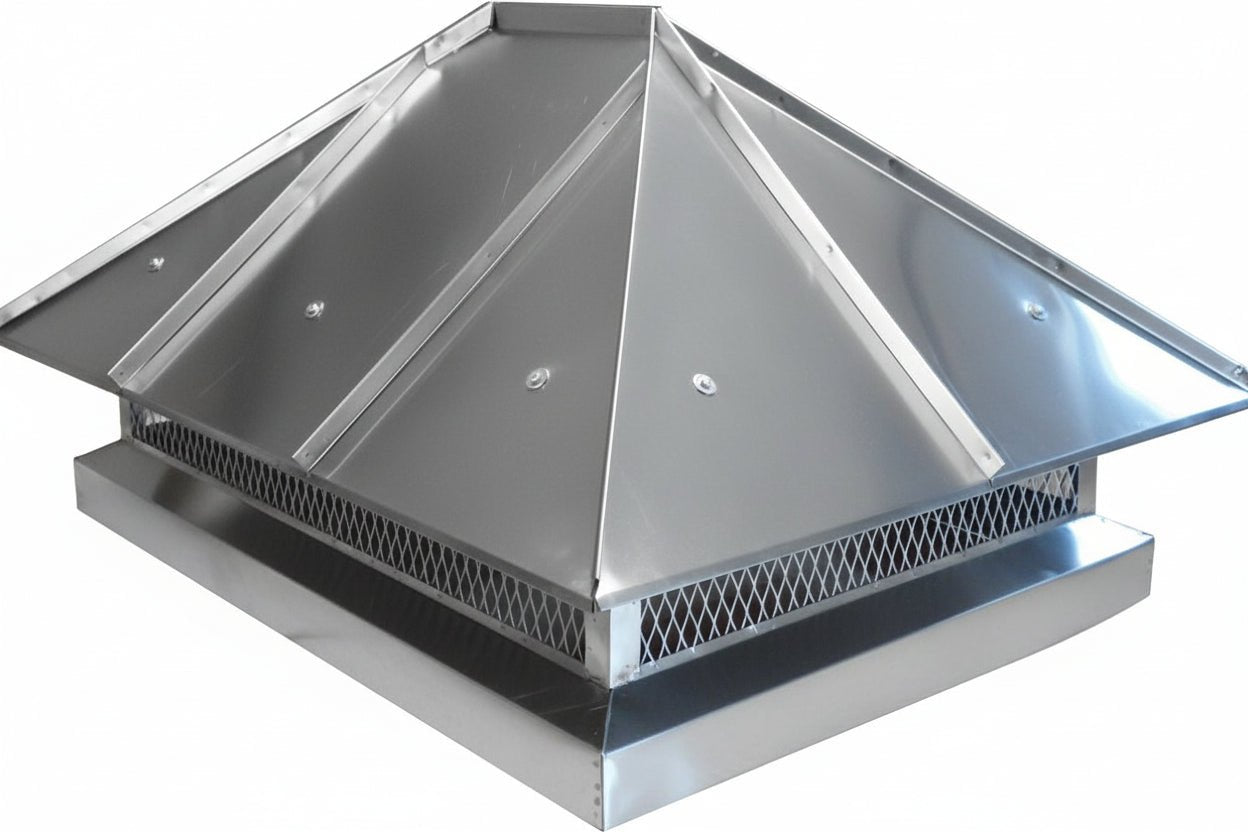
For this style, you will generally need:
- Overall outside chimney length
- Overall outside chimney width
- Height of the tallest flue
- Desired skirt depth
Step 2: Measuring for a Single-Flue Cap
-
Measure the Outside Length:
Place your tape measure on the outside edge of the clay tile and pull it straight across to the opposite outside edge. Write this number down. -
Measure the Outside Width:
Repeat the process for the other two sides to get your exact outside width. -
Measure the Flue Height:
Measure how far the clay tile extends above the concrete crown. You need at least 1 inch of exposed, structurally sound tile to securely attach a standard pressure-screw cap. -
Note the Shape:
Record whether your flue is square, rectangular, round, or oval. Standard caps offer a bit of wiggle room, but the base shape must match.
Step 3: Measuring for a Multi-Flue (Top Mount) Cap
-
Measure the Crown Footprint:
Measure the total overall length and width of the concrete chimney crown (the flat cement surface at the very top of the brickwork). -
Measure the Flue Footprint:
Imagine a box drawn around all of your extending clay tiles. Measure the total length and width of this entire area. -
Calculate Your Flange Clearance:
You will need flat concrete space to drill and mount the flanges of the cap. Subtract your flue footprint from your crown footprint. You generally need at least 1.5 to 2 inches of flat concrete on all four sides of the flues to successfully mount a multi-flue cap. -
Measure the Tallest Flue (Critical Step):
Measure from the flat concrete crown up to the top of your highest clay tile. The screen height of your new cap must be at least 6 inches taller than your highest flue. If the cap sits too close to the flue opening, it will restrict the draft and cause dangerous carbon monoxide to back up into your home.
Step 4: Measuring for a Multi-Flue (Outside Mount) Cap With Skirt
-
Measure the Chimney or Chimney Chase Footprint:
Measure the outside overall length and width of the masonry chimney or chimney chase. -
Measuring Tip:
Add 1/8 inch to 1/4 inch to your final length and width measurements. This adds a small buffer that accounts for uneven brickwork or chimney chases that might not be square. -
Determine Your Skirt Length:
The skirt is the metal that drops down the side of the chimney and covers the upper brickwork or top of the chimney chase from the elements. Determine how far down the side of the chimney you want the skirt to hang. Our standard length is 3 inches. -
Calculate the Screen Height:
A proper screen has a height at least 6 inches of vertical clearance from between the top of your highest flue tile and the cap's lid. This is slightly larger than the standard 6-inch rule and is required to prevent draft restrictions.
Common Measuring Mistakes to Avoid
-
Measuring the inside hole:
If your cap fits over the outside of the tile, measure the outside dimensions. Inside dimensions will result in a cap that is far too small. -
Ignoring obstructions:
Note any weird masonry steps, nearby antennas, or severe slopes on your crown. If your crown isn't perfectly flat, a standard multi-flue cap won't sit flush. -
Forgetting the 6-inch rule:
Failing to account for the height of the tallest flue on a multi-flue setup is the number one cause of draft issues after installation.
Next Steps: Find Your Perfect Fit
- If your measurements match standard sizes: Shop our complete line of heavy-duty stainless steel and premium copper chimney caps, proudly made in the USA.
- If you have unique dimensions: Don't try to force a standard cap onto a weirdly shaped chimney. We specialize in custom builds made with your exact dimensions. Our USA-based fabrication team will build a heavy-duty cap perfectly tailored to your home.