Why You Need a Stainless Steel Chimney Liner (And When You Don't)

What Does a Chimney Liner Do?
What Problems Does a Chimney Liner Solve?
-
Prevents Carbon Monoxide Leaks:
Older masonry chimneys often have gaps in the mortar joints or cracks in the clay chimney tiles. These cracks and breaks allow carbon monoxide and fuel gases to escape into the living spaces instead of the top of the chimney. -
Protects Against and Eliminates Dangerous Creosote Buildup:
With an improperly sized chimney flue or a leaky old chimney, flue gases can cool too quickly, condensing into dangerous creosote buildup. Stainless steel chimney liners, especially insulated liners, keep the flue gases warmer, moving more quickly on their way through and out of the chimney, reducing the potential for creosote buildup. -
Chimey Liners Can Help Stop Masonry Decay and “Spalling”:
Coal, oil, natural gas, and, to a lesser extent, wood appliances can create acidic moisture or condensate during the combustion process. This acidic moisture can soak into a brick and mortar chimney, leading to a process called spalling, which causes the masonry to flake, crack, and eventually break apart. A stainless steel chimney liner acts like a shield, extending the life of your chimney by decades. -
Remodel Like A Pro:
In remodel or retrofit situations, a stainless steel chimney liner corrects for an improperly sized flue. New appliances generally have smaller flue requirements, and an old, larger flue can cause poor drafting and a loss of efficiency. Chimney liners come in all sizes and can ensure a perfect draft.
Are Stainless Steel Chimney Liners Worth The Cost?
What's Wrong With My Existing Clay Chimney?
What Kind of Maintenance Does A Chimney Liner Need?
-
Annual Inspections:
The National Fire Protection Association or NFPA recommends that all chimneys be inspected at least once a year by a certified chimney sweep. They will check for connection integrity, signs of corrosion, and any drafting issues. -
Regular Cleaning:
If you are burning wood, regular cleaning with a poly chimney brush at least once a year will prevent any accumulating creosote and ensure you have a strong draft. A steel wire brush can damage the surface of a stainless steel chimney liner, creating grooves where soot can attach, and moisture can cause corrosion.
304L vs. 316L vs. 316Ti Stainless Steel Chimney Liners
Not all stainless steel chimney liners are made from the same alloy. Choosing the right material depends on the appliance you're venting, the type of fuel you burn, and the conditions inside your chimney.
304L stainless steel is an excellent choice for many wood-burning fireplaces, wood stoves, and fireplace inserts. It offers outstanding durability, corrosion resistance, and value for homeowners burning seasoned firewood under normal operating conditions.
316L stainless steel contains molybdenum, which provides increased resistance to corrosion caused by acidic flue gases and condensation. It's commonly recommended for gas, oil, and pellet-burning appliances, as well as installations where moisture and acidic byproducts are more likely to be present.
316Ti stainless steel builds on the corrosion resistance of 316L by adding titanium, which improves the alloy's stability at high temperatures and during repeated heating and cooling cycles. It's often selected for demanding installations, frequent use, or situations where maximum durability and long-term performance are priorities.
While each alloy has its advantages, there isn't a single "best" stainless steel chimney liner for every application. The right choice depends on your heating appliance, fuel type, chimney configuration, and local installation requirements.
Want to learn which alloy is right for your installation? Read our complete guide comparing 304L vs. 316L vs. 316Ti stainless steel chimney liners, where we break down the differences, ideal applications, corrosion resistance, and long-term performance of each material.
| Feature | 304L | 316L | 316Ti |
|---|---|---|---|
| Best for | Wood | Wood, Gas, Oil, Pellet | Heavy-duty, Multi-fuel |
| Corrosion Resistance | Excellent | Better | Best |
| High Temperature Performance | Excellent | Excellent | Outstanding |
| Cost | $ | $$ | $$$ |
Find the Right Stainless Steel Chimney Liner
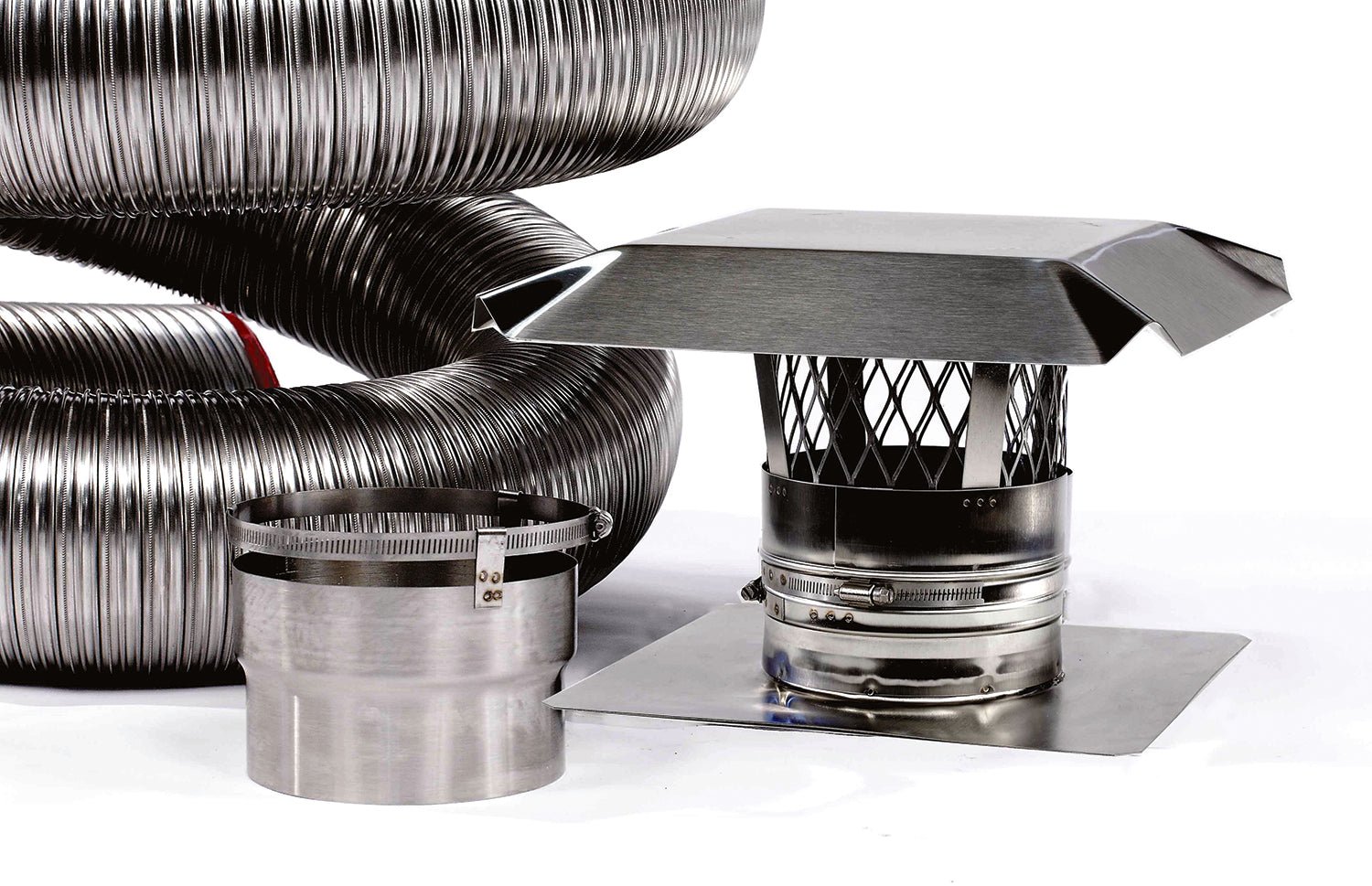
Stainless steel chimney liners can be sized all the way down to 3" in diameter and up to 12" and can be compatible with most venting appliances through appliance adapters and fittings.
Whether you're relining a fireplace, wood stove, furnace, or fireplace insert, choosing the correct liner material is essential for safety and long-term performance.
Browse:
- Flexible Chimney Liner Kits
- Smooth Wall Liners
- Insulated Chimney Liners
- Fireplace Insert Liners
- Wood Stove Liners
Not sure which liner you need? Contact our team with your appliance model and chimney dimensions, and we'll help you choose the right chimney liner or chimney liner kit before you order.